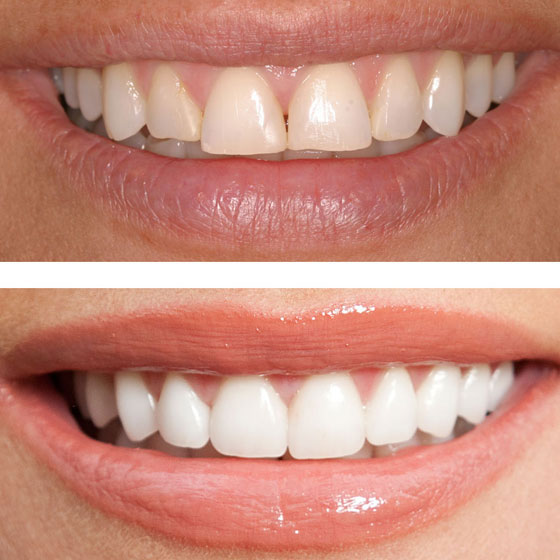
Where your dentist has thoroughly examined your teeth and determined that dental bonding is appropriate for you, the procedure itself is fairly simple:
Dental enamel removal- A small amount of surface enamel may need to be removed to make room for the bonding material. This is simply to ensure that the placement of bonding material does not overcrowd the teeth and create new dental issues.
Adhesive placement- Bonding agent is applied to the appropriate teeth to ensure better and more secure adhesion between the bonding material and your teeth. Bonding placement- Using the bonding material that is most appropriate and properly shaded to the color of your teeth, your dentist will apply the bonding material to your teeth.
Shaping and molding- Your dentist will shape and mold the bonding material to achieve the desired cosmetic effects. This may include covering stained, chipped, cracked or misshapen teeth, closing the gap between two teeth or restoring basic structure following minor decay.
Curing- With a special dental curing light, your dentist will harden the bonding material.
Polishing- Finally, the bonding material will be polished so that it looks and feels like a healthy, natural tooth.
AFTER THE PROCEDURE-
Undergoing the procedure does not mean that one must then adhere to a specialized dental regimen thereafter. The normal oral hygiene habits your dentist asks you to participate in, including:
- * Twice-daily brushing,
- * Once-daily flossing,
- * Twice-annual dental examinations and cleanings,
- * A proper nutritious diet,
- * Should be sufficient to ensure that your dental bonding lasts for a considerable period.
Although it's durable, it would be wise to avoid chewing on hard objects that can cause damage to natural teeth. Hard objects like ice, pencils and other such things.